(at)sch_sos on Instagram
(at)sch_sos on Twitter
hello(at)schoolsos.xyz
Donate to School SOS
SOS-26 is a free-to-attend 8 week long spatial practice development programme based in London, UK. Running between 16th July - 3rd September 2026, 12 participants will develop individual projects from their own lived experiences and communities. We aim to help develop these projects as part of developing participants' unique design and spatial practices.
This year, the programme is hosted exclusively by the Koppel Project, who will provide studio space for the length of the programme, work as well as host all our public events and presentations from practitioners at the cutting edge of design, academia, journalism and more, including Thomas Aquilina , Earth Tenders, alongside Andy Belfield (Public Works) and many more guests and visiting artists and designers.
Alongside our public lecture series, participants will attend a closed-door Sustainable Finance lecture series dedicated to finance and funding emerging practice. This year, this includes POoR and Sophie Williams (Edit Collective) alongside many other guests. SOS-26 provides weekly technical workshops in digital media making software, including; Data and GIS Analysis and Visual Communication.
All participants will publicise their work and research during a final one week exhibition at the Koppel Project opening on Friday 28th August. SOS-26 is supported using public funding by Arts Council England.
SOS-26 is a part-time programme that supports its participants practice alongside the programme. Our timetable demands 1-day-a-week throughout the 8 weeks alongside 4 additional afternoons for technical media-making workshops.
This year, the programme is hosted exclusively by the Koppel Project, who will provide studio space for the length of the programme, work as well as host all our public events and presentations from practitioners at the cutting edge of design, academia, journalism and more, including Thomas Aquilina , Earth Tenders, alongside Andy Belfield (Public Works) and many more guests and visiting artists and designers.
Alongside our public lecture series, participants will attend a closed-door Sustainable Finance lecture series dedicated to finance and funding emerging practice. This year, this includes POoR and Sophie Williams (Edit Collective) alongside many other guests. SOS-26 provides weekly technical workshops in digital media making software, including; Data and GIS Analysis and Visual Communication.
All participants will publicise their work and research during a final one week exhibition at the Koppel Project opening on Friday 28th August. SOS-26 is supported using public funding by Arts Council England.
SOS-26 is a part-time programme that supports its participants practice alongside the programme. Our timetable demands 1-day-a-week throughout the 8 weeks alongside 4 additional afternoons for technical media-making workshops.
2026 Brief: in dialogue
This year’s programme emphasises relationships, bridge-building, community conversations, organising, collective intelligence building, and consciousness raising to help you write a brief for your first, or next project. We build on an evolving conversation brought by SOS participants and alumni around centering lived experience to spatial practice, and engaging with community over issues that mean something to them. For this reason, you will bring an existing project or set of conditions between you and your community to develop through SOS26.
We will do this through a combination of co-produced sessions run by you as SOS peers, alongside a framework of support sessions run by practitioners with a focus on individual projects and specific readings of ethics, knowledge production, and the creative applications of spatial practice in the contexts you will define. You will be supported in knowledge sharing of how to potentially fund a project as well as how to technically build it through new media. By the end of SOS26 you will have made a unique Dia-Log: an open-ended document for recording a project’s changing aims, stakeholders and relationship dynamics, through a set of organising principles and ambitions.
Collectivising the Curriculum
As part of the short six-week programme, we are interested in collectivising on how design pedagogy can and should be shaped by its participants. Through a series of structured group seminars, you will help to co-construct the design projects of others’ as well as your own. During your time at SOS you will meet some of the 100+ SOS alumni network in sessions designed to build lasting networks as well as participate in group sessions on design ethics, community engagement and resilience for practice in a challenging world.
Project Dia-Log
The ‘Dia-Log’ is a set of values we want to help you determine whilst at SOS.
The SOS Dia-Log is a combination of things. Firstly, it is a document that takes whatever form you want it. It acts as a reflective journal, a diary of events, a plan of action, a list of components, a record of conversations with stakeholders, a compilation of thoughts from you and your community. It is a log [meaning a record], that is dia- [prefix meaning “across” and “through”] mediums and through time, producing a dialogue between your project objectives and your community.
This isn’t to say you are fixed to this, or that you must undertake all the steps we advise. This is a collaborative starting point that we suggest you use, that contains a lot of knowledge and experience from previous spatial projects. This work will form part of your own set of value-based outcomes, i.e. something to help guide your time at SOS and beyond.
This year’s programme emphasises relationships, bridge-building, community conversations, organising, collective intelligence building, and consciousness raising to help you write a brief for your first, or next project. We build on an evolving conversation brought by SOS participants and alumni around centering lived experience to spatial practice, and engaging with community over issues that mean something to them. For this reason, you will bring an existing project or set of conditions between you and your community to develop through SOS26.
We will do this through a combination of co-produced sessions run by you as SOS peers, alongside a framework of support sessions run by practitioners with a focus on individual projects and specific readings of ethics, knowledge production, and the creative applications of spatial practice in the contexts you will define. You will be supported in knowledge sharing of how to potentially fund a project as well as how to technically build it through new media. By the end of SOS26 you will have made a unique Dia-Log: an open-ended document for recording a project’s changing aims, stakeholders and relationship dynamics, through a set of organising principles and ambitions.
Collectivising the Curriculum
As part of the short six-week programme, we are interested in collectivising on how design pedagogy can and should be shaped by its participants. Through a series of structured group seminars, you will help to co-construct the design projects of others’ as well as your own. During your time at SOS you will meet some of the 100+ SOS alumni network in sessions designed to build lasting networks as well as participate in group sessions on design ethics, community engagement and resilience for practice in a challenging world.
Project Dia-Log
The ‘Dia-Log’ is a set of values we want to help you determine whilst at SOS.
The SOS Dia-Log is a combination of things. Firstly, it is a document that takes whatever form you want it. It acts as a reflective journal, a diary of events, a plan of action, a list of components, a record of conversations with stakeholders, a compilation of thoughts from you and your community. It is a log [meaning a record], that is dia- [prefix meaning “across” and “through”] mediums and through time, producing a dialogue between your project objectives and your community.
This isn’t to say you are fixed to this, or that you must undertake all the steps we advise. This is a collaborative starting point that we suggest you use, that contains a lot of knowledge and experience from previous spatial projects. This work will form part of your own set of value-based outcomes, i.e. something to help guide your time at SOS and beyond.
The Koppel Project (Our Host)
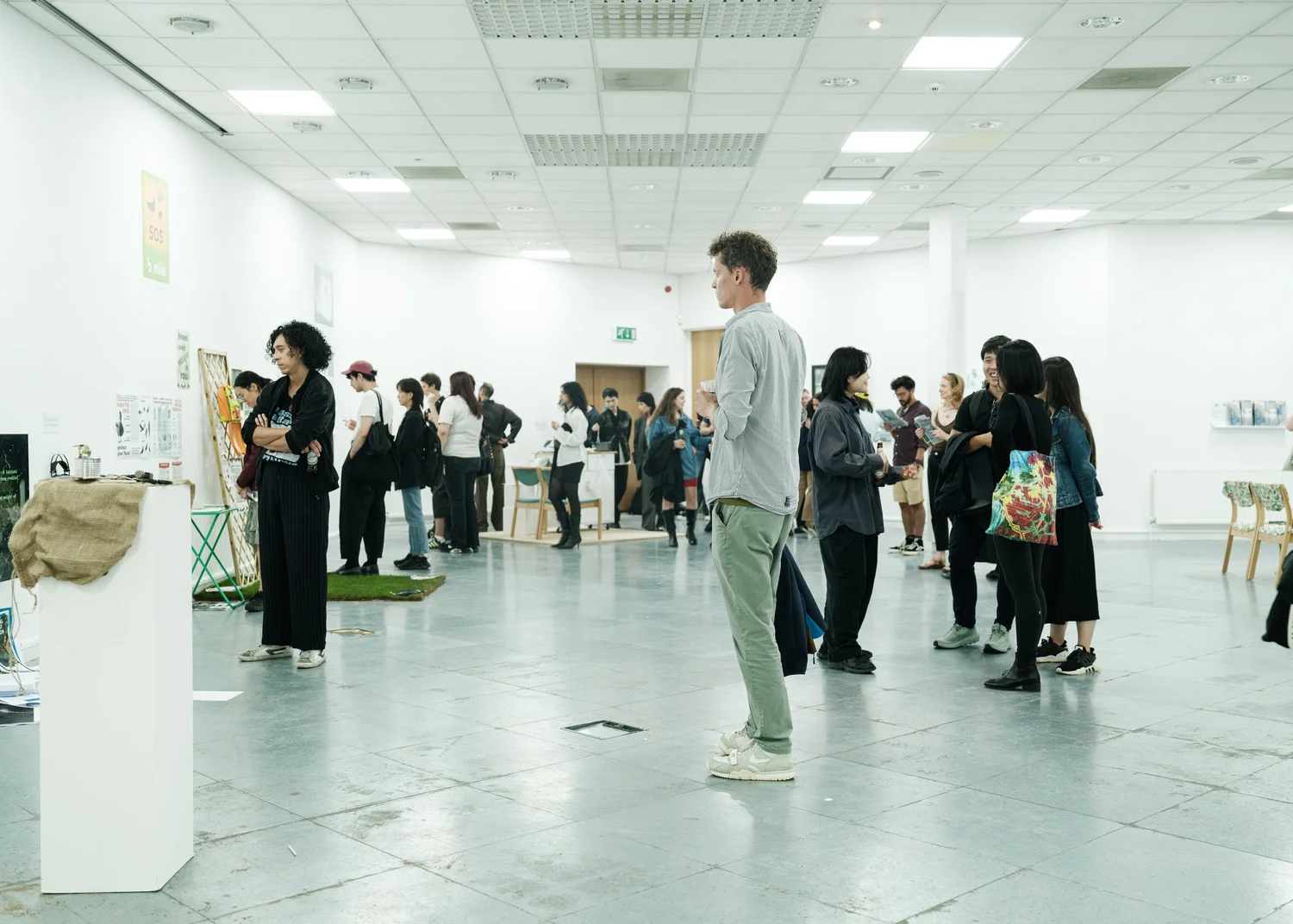
Image by Fred Howarth (2025)
'Mapping Elsewhere' exhibition of SOS-25 at the Koppel Project ANNEX
'Mapping Elsewhere' exhibition of SOS-25 at the Koppel Project ANNEX
Application Dates
06-04-2026
Applications Open
18-05-2026
Applications Close (Midnight)
25-05-2026
Decision to Applicants
Programme Dates
02-07-2026
SOS-26 Welcome Pack issued to successful participants
16-07-2026
SOS-26 Starts
03-09-2026
SOS-26 Ends
28-08-2026
Exhibition Opening Private View
03-09-2026
Exhibition Closes
W1 - Project Thematics
10.00-13.00
14.00-18.00
> 19.00
13-07-2026
Monday
14-07-2026
Tuesday
15-07-2026
Wednesday
16-07-2026
Thursday
Welcome!
Your Practice
17-07-2026
Friday
Data Analysis
W2 - Project Thematics
10.00-13.00
14.00-18.00
> 19.00
20-07-2026
Monday
21-07-2026
Tuesday
22-07-2026
Wednesday
23-07-2026
Thursday
Engagement
Advisory Session
Sophie Williams (Lambeth Council)
24-08-2026
Friday
GIS Analysis
W3 - Relationships
10.00-13.00
14.00-18.00
> 19.00
27-08-2026
Monday
28-08-2026
Tuesday
29-08-2026
Wednesday
30-08-2026
Thursday
Resilience
Advisory Session
Land in OurNames
31-08-2026
Friday
Data Visualising
W4 - Relationships
10.00-13.00
14.00-18.00
> 19.00
03-08-2026
Monday
04-08-2026
Tuesday
05-08-2026
Wednesday
06-08-2026
Thursday
Finance
Advisory Session
Earth Tenders
07-08-2026
Friday
Data Visualising
W5 Strategise
10.00-13.00
14.00-18.00
> 19.00
10-08-2026
Monday
11-08-2026
Tuesday
12-08-2026
Wednesday
13-08-2026
Thursday
Peer Organised
Advisory Session
Shivangi Mariam Raj (Funambulist)
14-08-2026
Friday
W6 Strategise
10.00-13.00
14.00-18.00
> 19.00
17-08-2026
Monday
18-08-2026
Tuesday
19-08-2026
Wednesday
20-08-2026
Thursday
All-day Advisory Sessions
Andy Belfield (Public Works)
21-08-2026
Friday
W7 Organise
10.00-13.00
14.00-18.00
> 19.00
24-08-2026
Monday
25-08-2026
Tuesday
26-08-2026
Wednesday
27-08-2026
Thursday
All-day Review
28-08-2026
Friday
All-day Exhibition Install
Exhibition Private View
W8 Organise
10.00-13.00
14.00-18.00
> 19.00
31-08-2026
Monday
01-09-2026
Tuesday
02-09-2026
Wednesday
03-09-2026
Thursday
Thomas Aquilina (New Arch. Writers)
04-09-2026
Friday
Exhibition Deinstall
Critical Action Group Seminar
Technical Workshop
Lecture
Peer2Peer Advisory Session
Exhibition
Private View
*
Indicative timetabling displayed, subject to change.
Apply here!
Who can participate?
SOS is looking for 12-15 creative young minds that want to develop their creative spatial practice. The course is demanding in design and theory and therefore asks that applicants have some prior knowledge of the Architecture, Design or Art disciplines. Participants must be engaged with contemporary affairs and feel confident speaking to a class of their peers on their own views.
How many days attendence is it?
There are programmed events every Thursday 10.00 - 20.30, which include your 1:1 Advisory Sessions on developing your practice/project. There are additional Tech Workshops over the first 4 Friday afternoons 14.00 - 18.00. We want to be as flexible as possible so let us know if there's anything getting in the way of your participation - we want to help!
How do I apply?
You must complete our online application form at the bottom of this page.
What's in the Application Form?
In our application form we ask applicants to describe three issues pertinent to them that they wish to explore during the course. Ideally, these are areas SOS can help participants fold into their developing practice. Applicants are asked to describe each issue through a reference image (not their own work) and a 100 word caption. Applicants will also be able to upload examples of their own work to a separate section.
While we ask for current and completed education and relevant work experience to date, we will not assess applications based on this. We are looking for participants that can think and act creatively on their own ideas.
Is the programme open to anyone?
Yes, but our content is best suited to those who have enough experience to know they aren't interested in practising more traditional forms of their discipline. We strongly welcome applicants from black and ethnic minority communities, those who identify as gender non-binary and other under-represented groups, as well as those from low-income backgrounds.
Diversity and Inclusion Statement
Part of our mission is to increase accessibility and diversity in the fields of creative spatial practice. SOS believes that the increased presence of minority groups enriches the field, we strive to promote diversity and inclusivity in all forms and would encourage those from underrepresented groups in the fields of Art, Design and Architecture to apply for SOS-26.
Apply here!
Who can participate?
SOS is looking for 12-15 creative young minds that want to develop their creative spatial practice. The course is demanding in design and theory and therefore asks that applicants have some prior knowledge of the Architecture, Design or Art disciplines. Participants must be engaged with contemporary affairs and feel confident speaking to a class of their peers on their own views.
How many days attendence is it?
There are programmed events every Thursday 10.00 - 20.30, which include your 1:1 Advisory Sessions on developing your practice/project. There are additional Tech Workshops over the first 4 Friday afternoons 14.00 - 18.00. We want to be as flexible as possible so let us know if there's anything getting in the way of your participation - we want to help!
How do I apply?
You must complete our online application form at the bottom of this page.
What's in the Application Form?
In our application form we ask applicants to describe three issues pertinent to them that they wish to explore during the course. Ideally, these are areas SOS can help participants fold into their developing practice. Applicants are asked to describe each issue through a reference image (not their own work) and a 100 word caption. Applicants will also be able to upload examples of their own work to a separate section.
While we ask for current and completed education and relevant work experience to date, we will not assess applications based on this. We are looking for participants that can think and act creatively on their own ideas.
Is the programme open to anyone?
Yes, but our content is best suited to those who have enough experience to know they aren't interested in practising more traditional forms of their discipline. We strongly welcome applicants from black and ethnic minority communities, those who identify as gender non-binary and other under-represented groups, as well as those from low-income backgrounds.
Diversity and Inclusion Statement
Part of our mission is to increase accessibility and diversity in the fields of creative spatial practice. SOS believes that the increased presence of minority groups enriches the field, we strive to promote diversity and inclusivity in all forms and would encourage those from underrepresented groups in the fields of Art, Design and Architecture to apply for SOS-26.
Apply here!